

If you make rotis or chapatis regularly in Germany, a roti maker can save time – but only if you buy the right type and learn the dough technique. The best roti maker in Germany is usually not the fanciest machine; it is the one with EU-compatible power, reliable heating, a usable plate size, easy returns, and reviews from people making chapati or tortilla-style flatbread.
This guide covers what to check before buying a roti maker or chapati maker in Germany, what features actually matter, how to use one without making hard rotis, and whether an electric roti maker is worth it for your kitchen. If you are travelling from India, also read this packing list of things to bring from India.
Best roti maker in Germany in 2026: quick buying advice
For most Indian households in Germany, a simple electric chapati maker or tortilla press-style roti maker is enough. Before buying, check the current Amazon.de price, delivery date, return window, plug type, warranty, and recent reviews. Roti makers can work well, but they are less forgiving than a tawa: the dough needs to be softer, rested properly, and pressed for the right number of seconds.
- Best for beginners: an electric non-stick roti maker with temperature control and a clear return policy.
- Best for frequent roti: a sturdy stainless-steel or thicker-plate model that can handle repeated heating.
- Best low-risk option: a tortilla press plus a good tawa if you only need help getting round rotis.
- Think carefully before buying: fully automatic roti machines are expensive, heavy, and support/repairs can be more complicated in Europe.
My practical rule: do not buy a roti maker only because it promises perfectly fluffy rotis. Buy it if you already make rotis often, want to save rolling time, and are willing to test dough hydration for a few attempts.
What is a roti maker and do you really need one?
What is a Roti?
Roti or Chapati is a traditional flatbread that is commonly eaten in South Asian countries like India, Pakistan, Bangladesh, and Sri Lanka. It is made from whole wheat flour and is usually cooked on a tawa and then on an open flame. The dough is rolled into circles, and the Rotis are cooked until they are soft and fluffy.
What is a Roti Maker?
A roti maker is a kitchen appliance that presses and heats dough between two plates. Most electric roti makers in Germany are closer to tortilla/chapati presses than fully automatic roti machines. They can help with shape and speed, but the final result still depends on the dough and timing.
Why Do You Need a Roti Maker?
There are several reasons why you should consider investing in a Roti maker. First, making Rotis can be time-consuming, especially if you have to make them in large quantities. A Roti maker can help you save time and energy.
Second, using a roti maker can help you make rounder rotis more consistently, but it does not guarantee soft rotis every time. If the dough is too hard, not rested, or pressed too long, the roti can become dry or rubbery.
Third, Roti makers are easy to use and clean, making them a convenient addition to your kitchen. Fourth, Roti makers come in different sizes and capacities, making them ideal for different family sizes and occasions.
Finally, Roti makers are affordable and cost-effective in the long run, as they eliminate the need for buying expensive pre-made Rotis.
What to consider when choosing the best roti maker?
Non-Stick vs. Stainless Steel Plates
When choosing a roti maker, check the plate material first. Non-stick plates are easier to clean and more beginner-friendly, but the coating can wear out if scratched. Stainless steel plates can be more durable, but they need more care and may take more practice.
Electric vs. Manual
Roti makers can be electric or manual. Electric Roti makers are more convenient as they do not require any effort on your part, while manual Roti makers require more energy and time. However, manual Roti makers are more portable and can be used even in places without electricity. They are only used for pressing the dough and getting round rotis.
Size, power and EU compatibility
Roti makers come in different plate sizes and power ratings. In Germany, also check that the appliance is built for 220-240V, has an EU plug or safe adapter setup, and has enough plate diameter for the size of roti you normally make. A very small plate can be frustrating if you cook for a family.
Top features of the best roti makers
Fluffy Rotis Every Time
The best roti makers heat evenly and recover heat quickly between rotis. Temperature control is useful because atta, dough softness and roti thickness can vary. Automatic shut-off is a good safety feature, but you should still stay near the appliance while cooking.
Easy to Clean
Roti makers should be easy to clean and maintain. Look for Roti makers with non-stick plates that are easy to wipe clean. Some Roti makers also come with dishwasher-safe plates, making cleaning even easier.
Shockproof Body
A Roti maker should have a shockproof body to prevent accidents and ensure your safety. Make sure the Roti maker you choose has a sturdy and durable body that can withstand regular use.
Top roti makers and chapati makers to buy in Germany
[content-egg-block template=offers_list]
How to Use a Roti Maker to Make Perfect Rotis Every Time?
Hi, I am Eri in Germany and here is my tip for all Indians living in Germany who want to make perfect rotis that puffs and are soft. Don’t feel bad if you are unable to make perfect roti in the first trial, give it some time and practice. I mastered making the perfect roti on the chapati maker after failing 3 rotis.
Step 1. Preparing the Dough and Rolling the Rotis
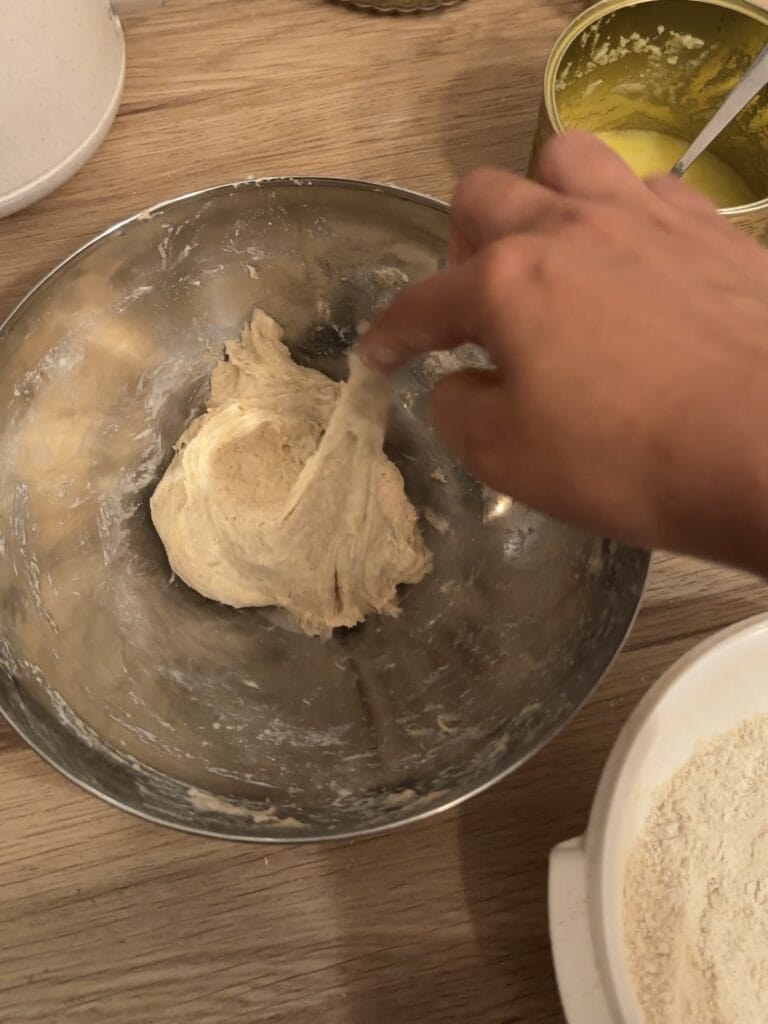
Start by preparing the dough using whole wheat flour and water. The dough for the chapati maker should be a little wet, soft and should not be hard. Knead the dough until smooth and let it rest for 10-15 minutes. Divide the dough into equal-sized balls and roll them into circles with your hands. Dust lightly each chapati balls with flour to prevent them from sticking and make it a little flat.
Step 2. Using the Roti Maker to Cook Perfectly Round Rotis
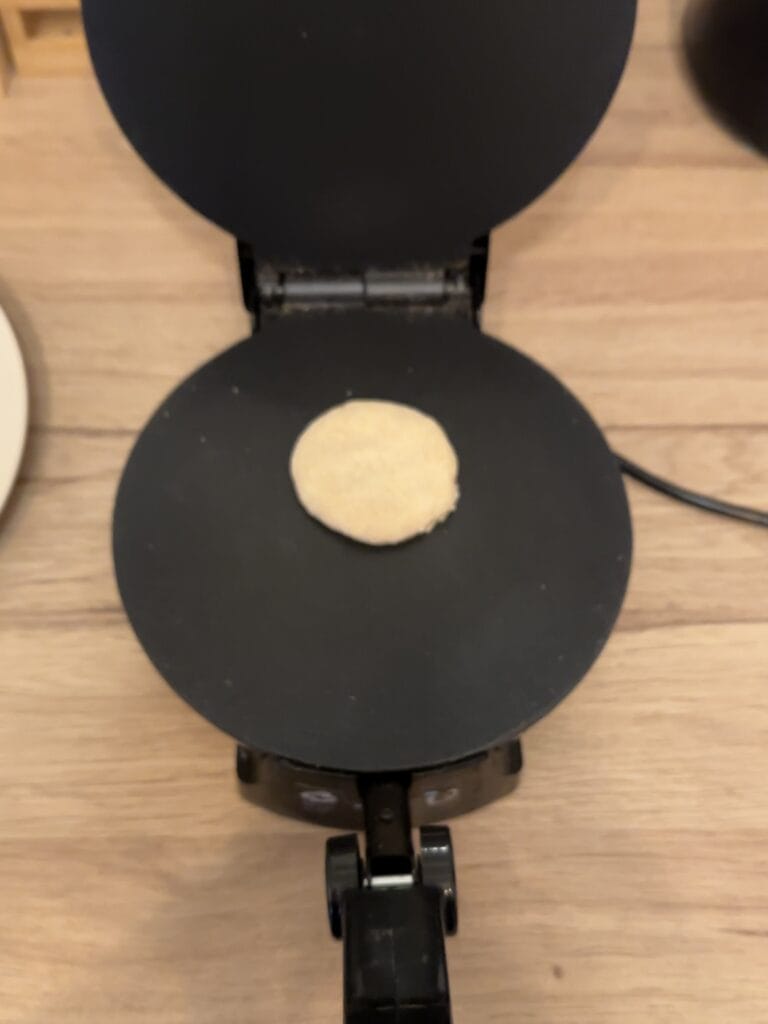
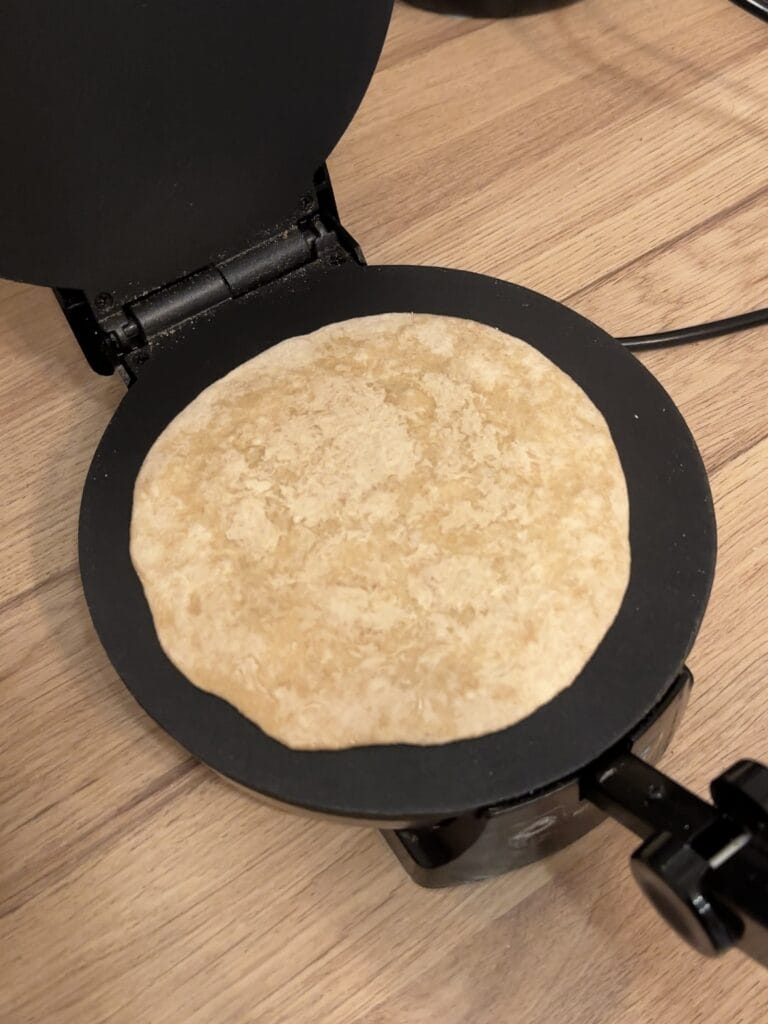
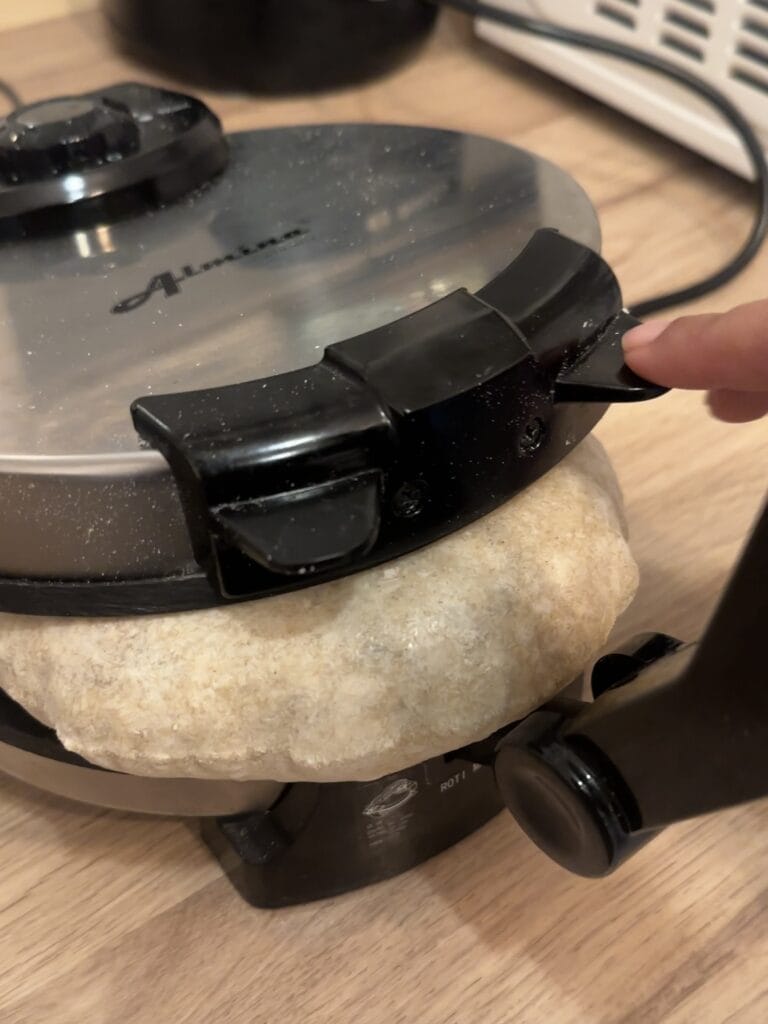
Preheat the Roti maker and place a rolled-out chapati on the bottom plate. Close the lid and press down the handle to flatten the Roti. Pressure is the key here, you don’t have to press with much force. Light pressure to close the lid and wait for 3 seconds is fine. Open the lid, wait for 5 seconds flip the Roti. Wait for another 25 seconds and close the lid. The Roti maker will make soft and fluffy Rotis every time. Once the roti is done, I also put ghee on one side of the roti.
Step 3. Storing and Reheating Rotis Made with a Roti Maker
You can store the Rotis in an airtight container in the fridge for up to three days. Reheat the Rotis by placing them on a hot tawa or in the microwave for a few seconds. This will make them soft and fluffy again.
Roti maker price in Germany and where to buy
[content-egg module=Amazon template=item]
Conclusion
A roti maker is worth buying in Germany if you make rotis often and want help with speed and shape. It is not worth buying if you expect it to fully replace practice, dough technique, or a good tawa. Before ordering, compare the current roti maker price in Germany, recent reviews, return terms, EU plug compatibility, plate size, and whether replacement or support is realistic for the brand you choose.
Check out some other posts
- Is German required in Germany?
- What if my university is not listed in Anabin?
- Buying Bike in Germany
- Requirement to Study in Germany
- Is Complete Course for Studying in Germany Worth It?

Leave a Reply